

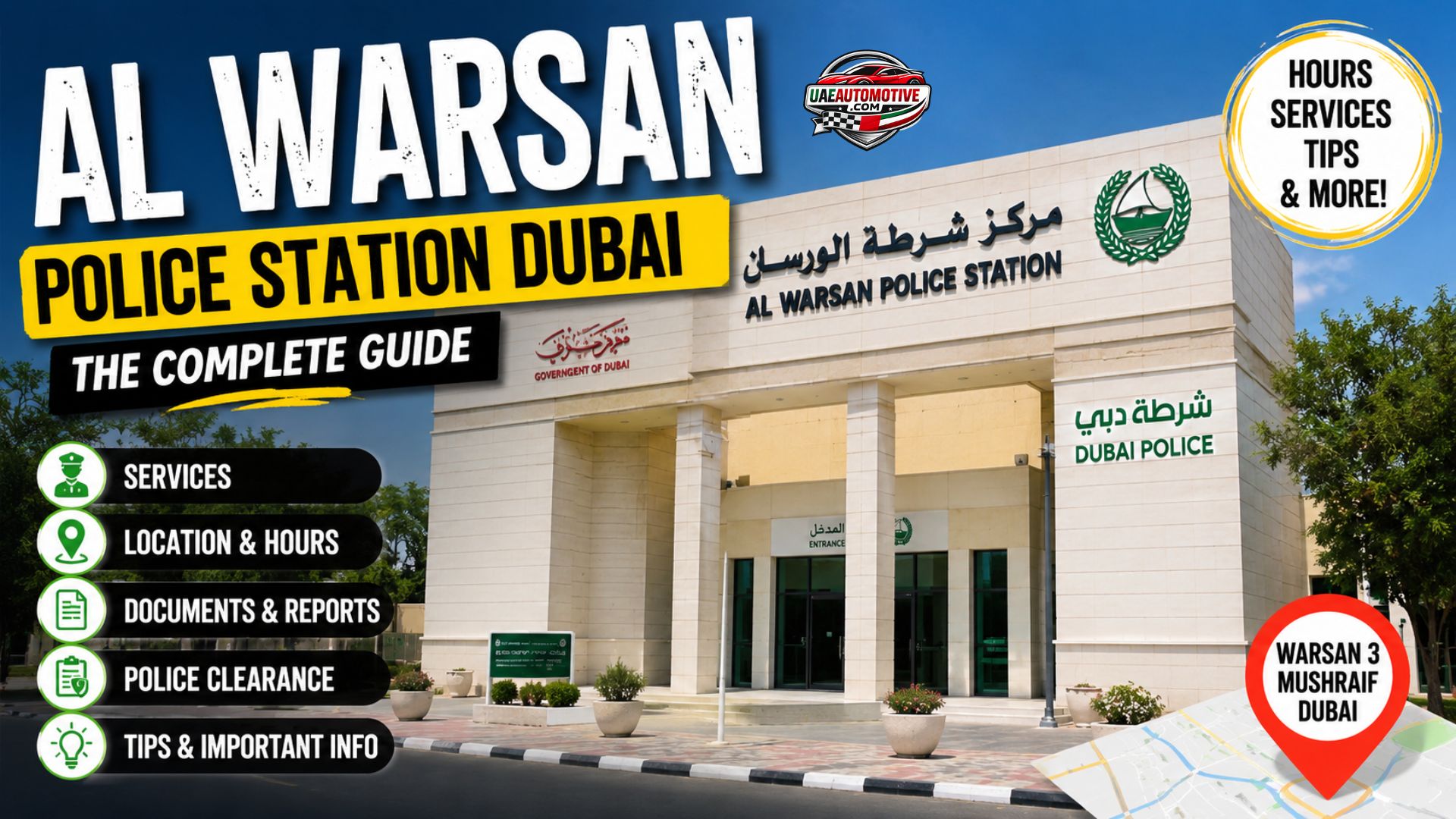
There’s a quiet irony about Al Warsan Police Station. It sits in one of the most densely populated corners of eastern Dubai — a neighbourhood built almost entirely by the hands of workers who came from the other side of the world — yet almost nobody has written anything useful about it. Search online, and you’ll find recycled bullet points, generic service lists, and copy-pasted opening hours. Nothing that actually helps you.
This guide is different.
Whether you’re a resident of International City who just got rear-ended on the E44, an expat whose Emirates ID disappeared from their pocket on the metro, or someone staring down a police clearance certificate process for a new job abroad — you’ll leave this page knowing exactly what to do, how to prepare, and what to expect when you walk through those doors.
Have A Look On It: Al Qusais Police Station
- The Neighbourhood Behind the Station: Why Al Warsan Is Unlike Anywhere Else in Dubai
- Exact Location, Access, and Getting There
- Opening Hours: What's Actually Open When
- Every Service the Station Offers — And How Each One Actually Works
- The Dubai Police App: What You Can Do Without Visiting At All
- What Separates Al Warsan Station from the Broader Dubai Police System
- Practical Tips That Most Visitors Learn the Hard Way
- Final Thoughts
- Frequently Asked Questions
The Neighbourhood Behind the Station: Why Al Warsan Is Unlike Anywhere Else in Dubai
Before you understand the station, you need to understand the community it serves. Because Al Warsan is genuinely unusual.
The area is divided into four sub-districts — Warsan 1, 2, 3, and 4. The police station itself sits in Warsan 3, within the Mushraif district. But its jurisdiction extends across a catchment zone that includes International City, parts of the Ras Al Khor industrial corridor, Warsan Village, and a stretch of working-class residential blocks that house tens of thousands of people who never make it into Dubai’s glossy property brochures.
International City alone spans over 800 hectares — one of the largest purpose-built residential communities in the emirate. Its country-themed clusters (China, England, France, Russia, Spain, and more) are home predominantly to South Asian and Arab expats on modest incomes. Indian nationals are the single largest tenant group in Al Warsan First, reflecting the wider demographic reality that Indians now make up over 4.3 million people in the UAE — more than double the figure from a decade ago, with more than half based in Dubai. Pakistanis are the second-largest expatriate group nationally.
What does this mean for the police station? It means the officers here deal with the lived realities of working-class expat Dubai in a way that more central stations rarely encounter. Workplace disputes. Lost documents carrying years of someone’s legal status. Traffic incidents on roads that weren’t designed for the volume they now carry. Fraud cases involving landlords or employers taking advantage of people who don’t know their rights. This is front-line community policing in the truest sense.
The Al Warsan area itself is still evolving. Originally industrial — known mainly for housing the Dubai Sewage Treatment Plant and commercial land plots — it has transformed significantly in recent years. New residential developments, affordable villas, community parks, and better infrastructure have made it an increasingly popular destination for families priced out of more central neighbourhoods. Villas rent for AED 7,000–12,000 per month; one- and two-bedroom apartments typically start from AED 4,000. The community has supermarkets, mosques, clinics, and nurseries. It’s a real neighbourhood now, not just a transit zone.
And that means its police station matters more than ever.
Exact Location, Access, and Getting There
Address: Warsan 3, Mushraif, Dubai (Plus Code: 4CWW+MXG)
The station sits close to the E44 Ras Al Khor Road, which is the main artery linking this part of Dubai to both the city centre and the Emirates Road. The Police Transport Department Impounding Area — which you may need to visit if your vehicle has been towed — is approximately 200 metres from the station itself.
By car: The E44 is your primary approach regardless of where you’re coming from. From International City, the drive is roughly 5–7 minutes. From Dragon Mart, allow 10–12 minutes. Dubai Safari Park is about 10 minutes away. From Downtown Dubai or Business Bay, you’re looking at 20–25 minutes depending on traffic.
By public transport: There is no metro station in Al Warsan. The nearest metro access is Centrepoint Station on the Red Line, which is about 11 minutes away by car. Several RTA bus routes connect International City to Rashidiya and Dubai Silicon Oasis. From International City, a taxi or rideshare to the police station is the fastest realistic option for those without a car.
One thing to note: Google Maps and Waze both reliably locate the station. Search “Al Warsan Police Station Dubai” and either will navigate you accurately.
Here is Google Map View:
Opening Hours: What’s Actually Open When
This is where most articles mislead you, and the confusion causes wasted trips.
Emergency services: Open 24 hours, 7 days a week, including Fridays and public holidays. Call 999 for genuine emergencies — don’t drive to the station.
Administrative services (traffic reports, complaint filing, certificate counters): Sunday to Thursday, 7:30 AM to 3:00 PM. Modified hours on Friday; most administrative functions are unavailable.
Practical advice: If you need a document processed, a report filed, or a certificate issued, go early — ideally before 10:00 AM. Officers are fresh, queues are shorter, and you’re far less likely to be told to come back tomorrow because the system is slow or a specific officer isn’t available.
Do not arrive at 2:45 PM expecting to file a complex complaint. Fifteen minutes before closing, you will be redirected.
Every Service the Station Offers — And How Each One Actually Works
Road Accident Reports
This is the most common reason people visit, and it’s also the one where knowing the process beforehand saves the most time.
If you’re involved in a road accident anywhere in the Al Warsan vicinity — especially on the E44, the roads around Ras Al Khor, or inside International City — you can report it directly at this station rather than traveling to a more central Dubai Police location.
For minor accidents without injuries: Dubai Police strongly encourages using the smart app or the 901 Contact Centre. Both allow you to submit an accident report remotely, which generates the official document you’ll need for insurance. This is faster than an in-person visit in most cases.
For accidents with injuries, disputes between drivers, or situations requiring police judgment: You need to come in person. Bring your driving licence, Emirates ID, vehicle registration card (Mulkiya), and photographs of the scene if you have them. The more clearly documented the incident when you arrive, the quicker the process.
If your vehicle has been towed: The impounding area is 200 metres from the station. But before you go anywhere, check your fine status on the Dubai Police app or website. Under Dubai’s traffic laws, if accumulated fines exceed AED 7,000, a vehicle can be impounded. Release requires clearing all outstanding fines, paying storage fees (AED 50 per day after the impound period in some cases), and sometimes a vehicle inspection. The impound period itself can run from 7 to 90 days depending on the violation — with Decree No. 30 of 2023 having updated several of these penalties significantly.
Lost Documents — Emirates ID, Passport, Driving Licence
A lost document in Dubai is not just an inconvenience. It’s a legal urgency. Your Emirates ID is required for practically every interaction with government services, banking, healthcare, and telecoms. Losing it puts daily life on hold.
The process at Al Warsan is straightforward: visit the station with whatever identification you do still have, explain the situation, and an officer will issue you an official loss report. This report is not optional — it is the required first step for:
- Applying for an Emirates ID replacement through the ICA (Federal Authority for Identity and Citizenship)
- Requesting a passport replacement through your embassy or consulate
- Replacing a UAE driving licence through the RTA
- Notifying your bank, employer, or visa sponsor
Bring any secondary ID you have. If your passport is lost and you have nothing, bring a photocopy if possible, or even a photo of the document saved on your phone. Officers are pragmatic and experienced with these situations.
One thing nobody tells you: The loss report itself is issued in Arabic. If you need it translated for an embassy, you’ll need to arrange a certified translation separately — either through a legal translation service or the embassy itself.
Police Clearance Certificates (Good Conduct Certificates)
This service is in higher demand than most people expect, because the situations requiring it are broader than most people realise.
A Dubai Police Clearance Certificate — formally called a Good Conduct Certificate — confirms that you have no criminal record in the UAE during your period of residence. You’ll need one for:
- Employment in many regulated industries (education, healthcare, security, government)
- Immigrating to countries like Canada, Australia, the UK, or Germany
- University applications abroad
- Professional licences in fields like medicine or law
- Business setup in certain categories
- Some banking relationships for high-value accounts
- Adoption processes
- Visa applications for family sponsorship in various countries
How to apply: For most residents, the online route is fastest. Through the Dubai Police website (dubaipolice.gov.ae) or the Dubai Police app, log in with your UAE Pass, select “Good Conduct Certificate,” upload your documents, and pay the fee. Processing typically takes 24 to 48 hours for straightforward online applications, though up to 5 working days is the official window.
Fees: Approximately AED 200 for residents (confirm the current fee on the Dubai Police portal before applying, as these figures are updated periodically).
If you have complications: Applications with anything unusual in the file, documents that need verification, or situations where you need to apply as a former resident now living abroad — these benefit from an in-person visit. Selecting Al Warsan as your nearest station on the app still routes the processing through the central system, but complex cases are always resolved faster with direct officer interaction.
Critical detail about validity: Most embassies and employers will only accept a certificate issued within the past 3 to 6 months. The MOI federal certificate is typically valid for 30 days. Time your application carefully relative to when you actually need to submit it.
You May Like It: Rashidiya Police Station
Criminal and Civil Complaint Registration
Theft. Fraud. Workplace exploitation. Landlord disputes crossing into criminal territory. Harassment. These are the complaints officers at Al Warsan handle daily.
The process begins at the main counter, where you’ll explain your situation and be directed to the relevant officer or department. For criminal complaints, you’ll give a statement, provide any evidence you have, and receive a case number. Civil matters (contractual disputes, payment issues, employer-employee conflicts that don’t rise to criminal level) may be redirected to other government bodies like the Ministry of Human Resources, but the station will advise you.
What to bring: Any documentary evidence related to your complaint. For employer disputes, bring your employment contract, payslips, and any written communication. For financial fraud, bank statements and transaction records matter. For theft, have a list of what was taken with estimated values. Going in with organised evidence versus arriving empty-handed is the difference between a 30-minute process and a two-hour back-and-forth.
Separate sections for men and women are available for privacy in sensitive cases.
Community Safety and Non-Emergency Concerns
Public nuisance. Suspicious activity in the neighbourhood. Safety concerns about a building. These can be raised at the station, or more efficiently through the Dubai Police app’s community reporting features or the 901 hotline.
The 901 Contact Centre — which received over 274,000 calls in just the first ten weeks of 2026 — handles 33 different services covering criminal matters, traffic requests, certificates, permits, and community support. For anything that doesn’t require physical presence, 901 is genuinely faster than driving to the station.
The Dubai Police App: What You Can Do Without Visiting At All
This deserves its own section because it changes the calculus of whether you need to visit in person.
Through the official Dubai Police smart application (available on iOS and Android), you can:
- Report minor traffic accidents without injuries
- Check traffic fines by plate number, Emirates ID, or traffic file number
- Apply for Good Conduct Certificates
- Inquire about vehicle impound status
- Pay traffic fines (by Visa, Mastercard, or eDirham)
- Request lost and found services
- Track complaint status
- Access over 100 additional services
Self-service kiosks in shopping malls and stations also accept cash and card payments for fines. You don’t need to queue at a counter for most fine-related matters.
The only situations where you genuinely must be present in person: accidents involving injuries or disputes, complex complaint filing, situations requiring officer assessment, vehicle release from impound, and cases where documents need to be physically stamped.
What Separates Al Warsan Station from the Broader Dubai Police System
Al Warsan Police Station is one node in a network that spans over 4,000 square kilometres, staffed by more than 32,000 personnel. That force was born on June 1, 1956, when 29 officers began working out of Naif Fort in Deira. By 1967, the force had reached 430 officers — and the city’s population then was under 30,000.
Today, Dubai Police is globally recognised as a model for what modern law enforcement can look like. It was the first Arab police force to use DNA testing in criminal investigations. The first to implement electronic fingerprinting. The first to establish a dedicated Human Rights Department. It introduced Smart Police Stations — fully automated, 24-hour facilities operating without permanent human staff — which have been so successful that the Netherlands opened its own version in 2024, built under Dubai Police guidance, at Utrecht Central Station.
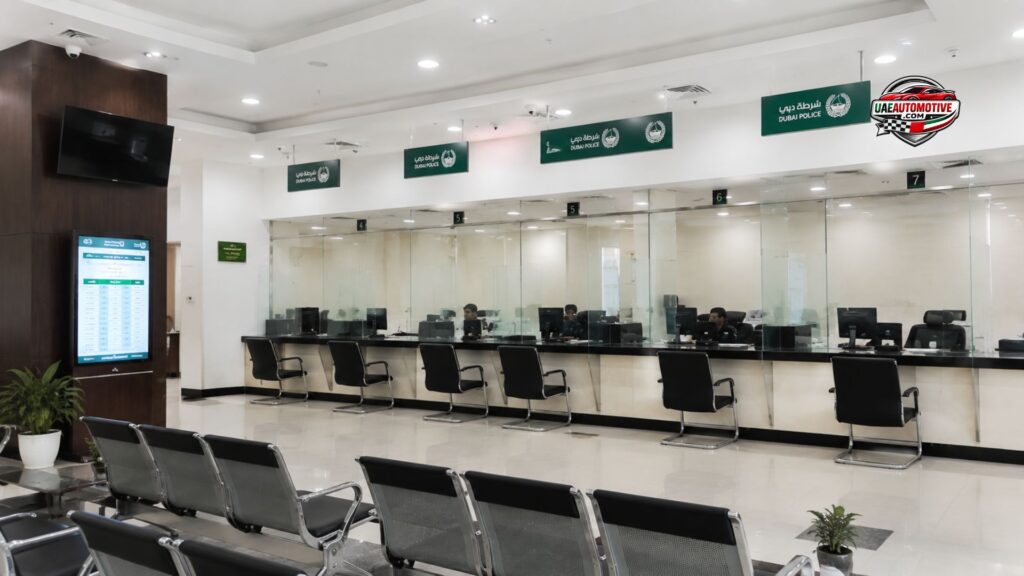
The Al Warsan station reflects these institutional values at the neighbourhood level. Officers are trained across multiple languages. Modern technology is integrated into daily operations. Waiting areas have separate men’s and women’s sections. The emergency function never sleeps.
But it’s still a local station. Its officers know the roads around International City. They understand the particular pressures of a community where many residents are navigating UAE systems in a language that isn’t their first, under employment arrangements that don’t always protect them the way they should. That local knowledge matters.
Practical Tips That Most Visitors Learn the Hard Way
Arrive early. The best window is 8:00 AM to 11:00 AM on a weekday. Everything moves faster.
Bring originals and photocopies of every relevant document. Some counters require both. Running out to find a photocopy machine wastes time you didn’t budget for.
Write down what happened before you arrive. For complaints or accident reports, officers will ask for a timeline of events. Having this organised in your phone’s notes saves back-and-forth and ensures you don’t forget details under pressure.
Check your fine status before visiting for traffic matters. If you have outstanding fines you weren’t aware of, discovering them at the counter complicates things. The Dubai Police website and app let you check by plate number or Emirates ID in 30 seconds.
For impound-related visits, confirm the vehicle’s location first. The impound area near Al Warsan is for that zone’s cases — but vehicles from different violations may be at different yards. Confirm via the Dubai Police app before driving across the city.
If you don’t speak Arabic or English well, bring someone who does. Officers are accommodating, but having a translator with you dramatically speeds up statement-giving and documentation.
Call 901 before visiting for anything non-urgent. The hotline can confirm whether your case genuinely needs an in-person visit, saving you unnecessary travel.
Never arrive without ID. Even for the most casual inquiry, you’ll be asked for identification. Without it, nothing moves.
Don’t Forget To Read It: Naif Police Station
Final Thoughts
Al Warsan Police Station serves a community that often gets overlooked in Dubai’s bigger narrative — working-class, predominantly expat, geographically spread across a transitional zone between industrial infrastructure and emerging residential life. The station handles everything from E44 fender-benders to document emergencies to financial fraud cases, and it does so against the backdrop of a police force with 70 years of institutional development behind it.
Know your hours. Prepare your documents. Use the app when you can. Visit in person when you must.
The station is in Warsan 3 on the E44. Emergency services never close. Administrative counters run Sunday to Thursday, 7:30 AM to 3:00 PM. Call 999 for emergencies. Call 901 for everything else first.
Frequently Asked Questions
Where exactly is Al Warsan Police Station?
In Warsan 3, Mushraif, Dubai — near the E44 Ras Al Khor Road. The Plus Code is 4CWW+MXG. Waze and Google Maps both locate it accurately under “Al Warsan Police Station Dubai.”
Is Al Warsan Police Station open 24 hours?
Emergency services operate around the clock every day including Fridays and public holidays. Administrative counters — for certificates, reports, and complaint filing — are open Sunday to Thursday, 7:30 AM to 3:00 PM.
My car was towed near International City. Is it at the Al Warsan impound?
Likely yes, given the proximity. The Police Transport Department Impounding Area is approximately 200 metres from the station. Before going in person, check impound status on the Dubai Police app using your plate number — and check for outstanding fines, because fines exceeding AED 7,000 must be cleared before release is possible.
What documents do I need to file a report or complaint?
Emirates ID or passport as a minimum. For traffic matters: driving licence and vehicle registration. For complaints: any documentary evidence relevant to your situation (contracts, receipts, communications). For lost items: whatever identification you still have.
How do I get a police clearance certificate in Dubai?
Apply online through the Dubai Police app or website using UAE Pass. The fee is approximately AED 200 for residents. Processing takes 24 hours to 5 working days. The certificate (called a Good Conduct Certificate) is accepted by most embassies and employers if issued within the past 3–6 months. In-person applications at Al Warsan work for complex cases.
Can I pay a traffic fine at Al Warsan Police Station?
Yes, you can pay at the counter. You can also pay online via the Dubai Police app, on the Dubai Police website by card, or at self-service kiosks in malls and stations. The counter visit is rarely necessary for straightforward fine payments.
I lost my Emirates ID. What exactly happens when I go to the station?
You’ll file a loss report with an officer, which documents the circumstances of the loss. This report is required before the ICA will issue a replacement Emirates ID. Bring any secondary identification you have. The report is issued in Arabic — if you need it in English for an embassy or bank, arrange a certified translation separately.
Does Al Warsan Police Station have language support beyond Arabic?
Many officers speak English. Given the area’s demographics, there is typically also capacity to communicate in Hindi and Urdu. For formal statements, Arabic is the official language of record — but communication is generally accessible to English speakers.
What’s the emergency number and non-emergency number for Dubai Police?
Emergency: 999. Non-emergency and service enquiries: 901. The 901 line handles 33 services by phone, email, app, and live chat — around the clock.
I’m leaving the UAE and need a police clearance certificate for immigration abroad. Does validity matter?
Significantly. Most immigration authorities (Canada, Australia, UK, Germany, and others) require the certificate to have been issued within the last 3 to 6 months. The UAE MOI federal version is typically valid for 30 days only. Apply strategically based on when your actual submission deadline falls — not months in advance.
