The UAE police ranks are important in terms of security and safety concerns within the nation. Whether one is interested in the most satisfying occupation in law enforcement or simply wants to know how the police work in the UAE, one will be obliged to know the system of UAE police ranks. This article will point out many of the ranks that constitute the UAE police force, how they are organized, and what each rank entails.
The UAE police system began to take shape when the federation came into being. Over the years, the UAE police forces have grown and changed under the mandate for public order and safety. From the creation of local police departments to national security agencies, the establishment of police ranks reflects the process of development and modernization in the country.
Year/Period
Event / Development
1950s–1960s
Early police forces established in individual emirates.
1971
Formation of UAE; gradual unification of police standards.
1970s–1980s
Introduction of formal rank structures across emirates.
1990s
Modernization of ranks, uniforms, and insignia.
2000s
Standardized ranks adopted nationwide; training enhanced.
2010s–Present
Advanced systems, including specialized units and career progression frameworks.
The United Arab Emirates police force is organized in a well-structured hierarchy. This helps the police make their operations run in order and ensures that all law enforcement duties are discharged with efficiency. Each rank has duties assigned to it with responsibilities, while the rank hierarchy provides a clear line of promotion. These ranks provide insight into how UAE police maintain order and respond to situations.
Categories of UAE Police Ranks
Broadly speaking, rank gradations within the UAE police can be divided into two layers: commissioned and non-commissioned officers. Unlike commissioned officers who hold key positions with great decision-making powers, the non-commissioned officers support such operations at the tactical level. Other special units, for example, traffic or anti-terrorism forces, have their rank structures, and when it comes to addressing specific needs, the whole system becomes dynamic.
Category
Description
Commissioned Officers
Senior leadership and management ranks
Non-Commissioned Officers (NCOs)
Supervisory and experienced personnel
Enlisted/Constables
Entry-level police personnel
Commissioned Officer Ranks
Brigadier
The brigadier is the top rank in the hierarchy and a critical position in national security. He acts as a senior leader, commanding the largest divisions, and makes high-level decisions that determine the strategic course taken by the police force.
Colonel
Their role is to oversee the various operations of the departments. Colonels organize police operations in a way that ensures the proper use of resources essential in maintaining law and order.
Lieutenant Colonel
The lieutenant colonel plays a vital linking role between the top management and the actual operation. His responsibilities involve the implementation of policies as well as leading other officers.
Major
It is in this context that majors are usually entrusted with the command of large units and are normally given responsibility to effect high-level tactics. Besides that, they are also in charge of considerable resources, and the responsibility for suitable utilization is placed in key police functions.
Captain
A major role of a captain is to ensure that officers perform their duties as they are required and, for the most part, serve as team leaders. Captains may also serve as an initial level of command in the field and are responsible for leading tactical operations and officer performance.
Lieutenant
The lieutenant is an integral link in the chain of command. They perform leadership functions in various units and in conjunction with junior officers to accomplish the mission.
Second Lieutenant
Normally, they are second lieutenants who have just graduated from police academies or those who have just joined the force. They mostly help in acquiring experience as they assist the senior officers in performing their duties.
Rank
Approx. Basic Salary (AED/month)
Typical Requirements
Brigadier
~35,000 AED
UAE national, high school diploma at least, good conduct
Colonel
~25,000 AED
Similar to Brigadier; plus service experience, good conduct
Lieutenant Colonel
~20,000 AED
University or police college degree, good conduct
Major
~16,000 AED
Degree, medical fitness, clean criminal record
Captain
~14,000 AED
Similar academic and behavioral requirements
First Lieutenant
~11,000 AED
Minimum degree, good reputation, no criminal record
Second Lieutenant
~9,000 AED
Entry-level officer; university degree or equivalent, physical & medical fitness
Non-Commissioned Officer Ranks
Warrant Officer
Warrant officers combine leadership with technical expertise. Many work as team leaders and have responsibility for operations requiring a great amount of skill and precision.
Sergeant Major
These are senior NCOs who play an important advisory role to the commissioned officers. They also serve highly instrumental roles both in the training of junior officers and in maintaining discipline among their teams.
Sergeant
Sergeants are the team managers of officers, supervisors at the scene to ensure that police work is done right, and provide advice to working officers.
Corporal
Corporals assist the sergeants by taking some of the leadership responsibilities in the field. They are normally given small teams to head so that responsibilities are both effectively and efficiently executed.
Lance Corporal
Lance Corporals are junior NCOs who usually fall in the early phases of career advancement and are directly involved in supervisory roles, assisting the more experienced NCOs in different operational activities.
Rank
Approx. Basic Salary (AED/month)
Typical Requirements
Warrant Officer
~6,500–8,500 AED
Several years of service, strong performance record, leadership training
Staff Sergeant / Sergeant
~6,000–6,500 AED
Minimum secondary education, medical fitness, clean record, some supervisory experience
Corporal / Assistant‑First
~7,000 AED
Secondary education, good behavior, basic policing experience
Lance Corporal / Assistant‑Second
~6,500–7,000 AED
Similar to Corporal, plus probation or field-training performance
Private / Police Constable
~4,500–5,500 AED
High school diploma, physical fitness, pass recruitment exams and training
UAE Police Ranks for Specialized Units
The UAE’s police force is divided into a number of specialized units, each having its own ranking system. Police officers working at the CID or the Counterterrorism Unit have somewhat different career developments due to the additional responsibilities they bear and special roles they play in fighting against specific crimes and threats against national security.
Rank Category
Example Ranks / Roles
Officers
Captain, Major, Lieutenant Colonel
Non-Commissioned Officers (NCOs)
Sergeant, Staff Sergeant
Specialized Personnel
SWAT Operator, Bomb Squad Specialist, K9 Unit Handler
Ranks and Their Responsibilities in Policing
Each rank in the UAE police has a special role through which the general purposes of law enforcement are realized. While senior officers in the brigadier and colonel ranks participate in strategic decision-making, junior officers in lieutenant and corporal ranks are concerned with direct, practical activities regarding law enforcement. Understanding these different responsibilities associated with each rank goes a long way to explaining the complex, interconnecting nature of policing.
Rank Category
Rank
Typical Responsibilities
Commissioned Officers
Brigadier
Strategic leadership, overall command of departments, policy implementation
Colonel
Oversees major divisions, manages senior staff, ensures law enforcement standards
Lieutenant Colonel
Manages units or regional stations, supervises operations and training
Major
Leads specialized units or mid-level departments, operational planning
Captain
Supervises teams, coordinates investigations, ensures compliance with procedures
First Lieutenant
Assists higher officers, oversees small units, reports on operational matters
Second Lieutenant
Entry-level officer, patrol duties, initial investigations, supports team leaders
Non-Commissioned Officers (NCOs)
Warrant Officer
Senior NCO, assists officers in administration and training, supervises NCOs
Leads small teams, supports sergeants in field operations
Lance Corporal / Assistant-Second
Assists corporals, performs specific operational tasks, monitors junior personnel
Private / Police Constable
Patrol duties, basic law enforcement, reports incidents, assists public
The Promotion Process within the UAE Police Force
Promotion within the police force in the UAE is based on clear criteria, including performance appraisals, consideration of years of service, and completion of special training courses. Moving up this hierarchy does not just take time; potential leaders have to prove their leadership qualities, technical abilities, and dedication towards public service.
Women in the UAE Police Ranks
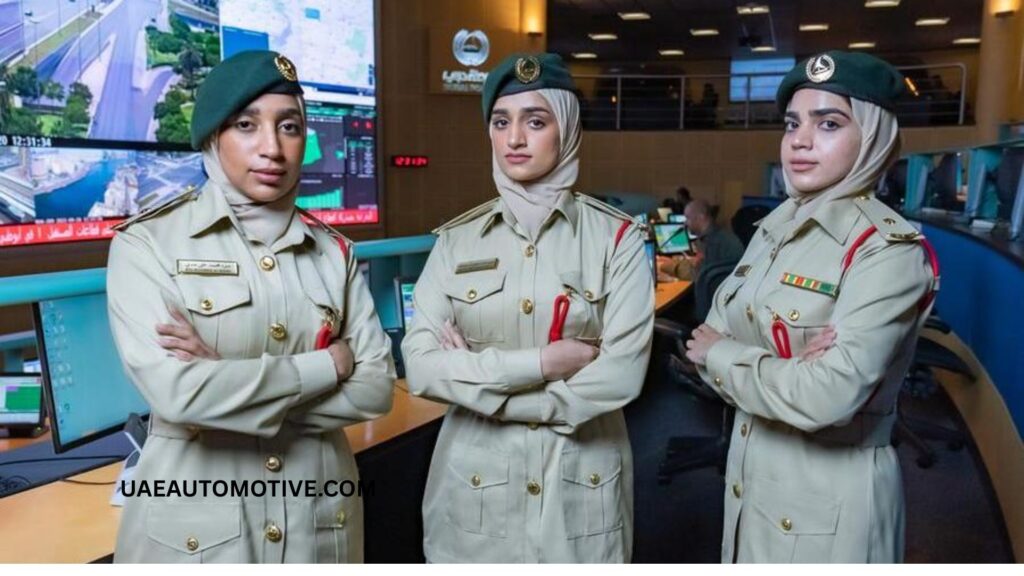
In the last years, the UAE police have placed extra emphasis on increasing the women serving within their ranks. From traffic enforcement to criminal investigations, women began taking key positions in various capacities. As further increases in gender equality took place in the UAE, many more opportunities within law enforcement opened up for women.
Rank Category
Typical Roles / Responsibilities
Commissioned Officers
Leadership positions in departments, strategic planning, management of specialized units, training programs
Non-Commissioned Officers (NCOs)
Supervisory roles, team coordination, community policing, administrative support
Enlisted / Constables
Patrol duties, traffic control, public assistance, investigation support, community engagement
Rank Recognition and International Cooperation
Since the UAE police force is a member of international policing networks such as Interpol, it has helped ensure its law enforcement ranks are globally recognized. This sort of cooperation makes dealing with cross-border crimes and security problems so much easier. Knowing how the UAE police ranks interact with foreign police systems helps describe the country’s role in global policing.
Role of UAE Police in National Security
The UAE police ranks are therefore essential as far as security is concerned at both national and state levels. From patrolling on the roads to guarding key installations, the police ensure that the nation’s security policies are implemented. While the senior ranks engage directly in planning and executing measures for national security, it is the junior ranks that make sure such strategies are implemented on the ground.
Area of Responsibility
Key Role
Law Enforcement
Maintain public order, prevent and investigate crimes
Counterterrorism
Detect and prevent terrorist activities, coordinate with intelligence agencies
Border Security
Monitor borders, ports, and airports to prevent illegal entry and smuggling
Cybersecurity
Protect national digital infrastructure, investigate cybercrimes
Community Safety
Engage with the public, promote safety awareness, manage emergencies
Crisis Management
Respond to disasters, coordinate security during national events
In case of crisis and national emergencies, the police leadership in the UAE would be critical in making strategic decisions. The direction of policy formulations in law enforcement would, therefore, rest in the hands of senior officers such as colonels and brigadiers, while the implementation of such strategies would fall into the hands of lower-ranking officers.
Rank Category
Rank
Leadership Role
Decision-Making Responsibility
Commissioned Officers
Brigadier
Overall strategic leadership
Sets policies, oversees all operations, final decision authority
Colonel
Division or regional leadership
Approves major operational plans, supervises senior staff
The success of the UAE police force is founded on training and development. Whatever rank an officer may hold, specialized training is given to them in developing their careers. From basic academy training to state-of-the-art programs for advanced leadership, the police profession in the UAE is built upon continuous learning.
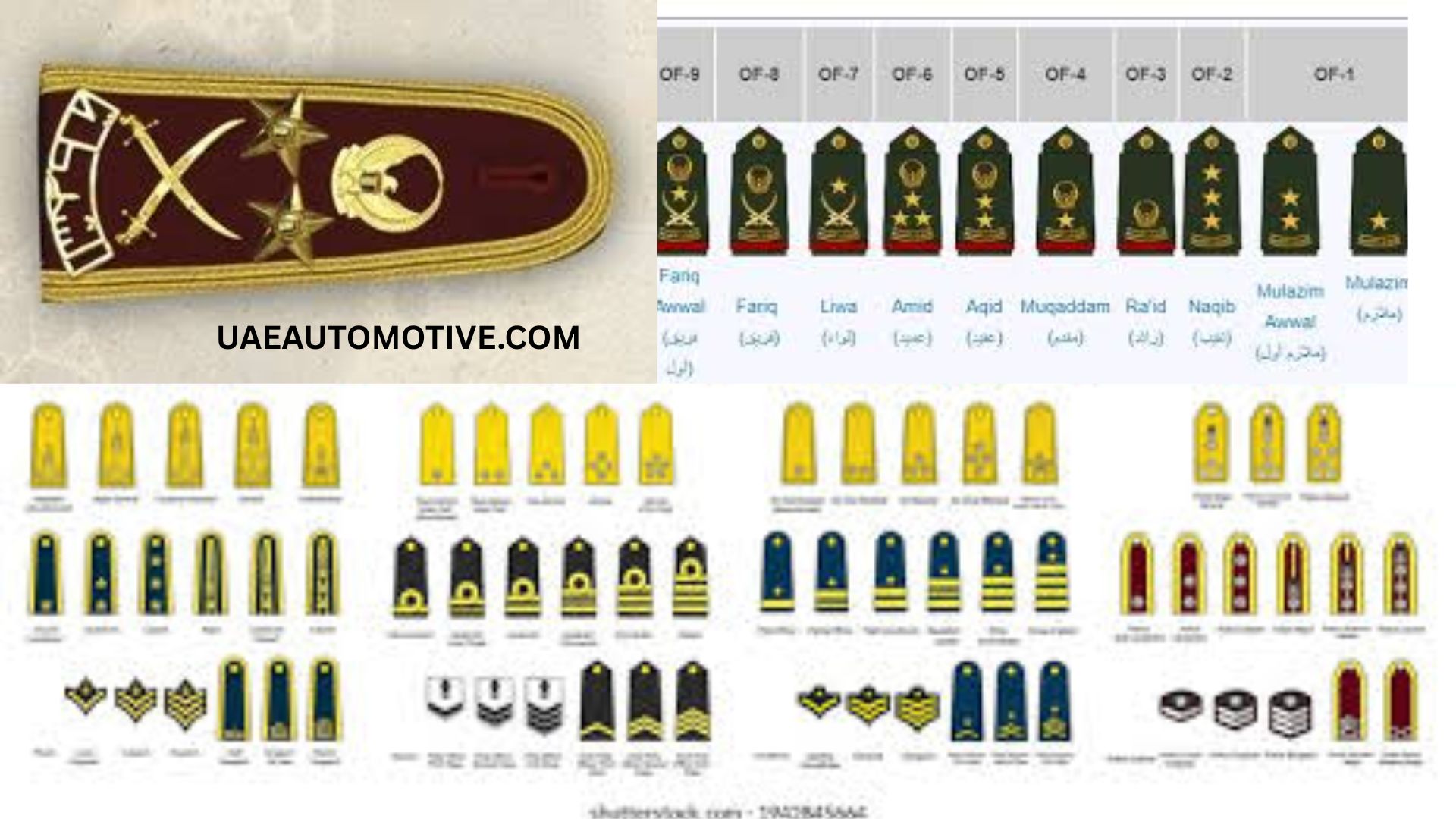
UAE Police Ranks Insignias and Uniforms
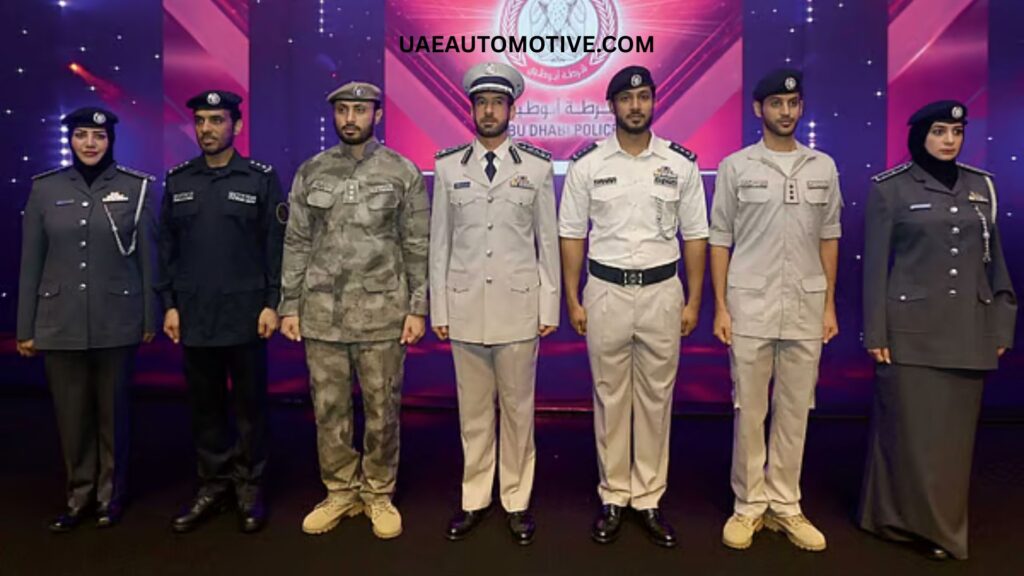
Insignias on police uniforms depict rank; such insignias help differentiate various levels within the police force so that authority is clearly identified. Uniforms are fitted to each rank and have distinct designs that reflect rank and role within the force.
The Role of Technology in Modern Policing and Rank Structure
Technology in modern policing—from surveillance equipment through to analytical data tools—plays a major role and reshapes how all ranks of officers carry out their duties. It is usually the higher-ranking officers who lead in this technological integration aimed at ensuring that the police force remains efficient and responsive toward emerging challenges.
Aspect
Role of Technology
Impact on Rank Structure / Policing
Communication Systems
Advanced radios, secure networks, mobile apps
Improves coordination across ranks; allows faster decision-making at all levels
Surveillance & Monitoring
CCTV, drones, facial recognition
Supports officers and NCOs in field operations; enhances situational awareness for higher ranks
Data & Analytics
Crime databases, predictive policing, AI analysis
Assists officers and supervisors in planning; helps commanders allocate resources efficiently
Cybersecurity & Cybercrime Units
Digital forensics, threat detection tools
Creates specialized units led by commissioned officers; NCOs supervise technical teams
Training & Simulation
VR, AR, e-learning platforms
Enhances skills of all ranks; allows officers to train in realistic scenarios without field risk
Incident Management Systems
Automated reporting, GPS tracking
Streamlines reporting for constables and corporals; allows higher ranks to monitor operations in real-time
Challenges and Issues within the Rank System
While effective, the UAE police ranks system has its challenges. It sometimes causes inequity in the ranks, clashes in leadership, or operational bottlenecks. The UAE has continued to refine the system with regard to those concerns in order for the police to remain adaptive and competent.
Public Perception of UAE Police Ranks
The public perception of UAE police ranks usually depends on the rank structure and conduct of the individual officer. While senior officers have gained respect because they possess decision-making authority, junior officers are perceived as the face of everyday law enforcement. How police ranks are perceived can influence public trust and cooperation.
UAE Police Ranks in Popular Culture
UAE police ranks do occasionally feature in movies, TV, and media, shaping public perceptions of the force. These tend to portray senior officers as having more authority than the rest, but may simplify or exaggerate the roles and responsibilities attached to different ranks.
Conclusion of UAE Police Ranks
Understanding UAE police ranks is quite important, whether it’s for those interested in law enforcement or national security. From the highest ranks, such as brigadiers, down to more physically involved jobs for sergeants and corporals, each rank contributes a great deal to maintaining the rule of law and order that keeps the UAE safe. As times change, so will the police force and so will the rank structure to meet emerging challenges.
UAE Police Ranks FAQs
What is the highest rank present in the UAE police force?
The highest rank is Brigadier.
How do I join the UAE Police Force and progress through the ranks?
You must first meet the criteria for eligibility concerning education and fitness. It would be your work performance, training, and experience that would decide on your career path.
What are the roles of a Lieutenant Colonel?
A Lieutenant Colonel links the top management with the general proceedings, coordinates policy implementation, and supervises other officers.
Is there any scope for women in the UAE police ranks?
Yes, women can be promoted to higher ranks since more opportunities for women are available in command in the police forces.
How does the UAE police rank system compare to other countries?
The police ranking system in the UAE is in line with international policing systems, considering clear structures and hierarchies, but it’s tailor-made to suit the country’s needs.
What are the special UAE police units?
Special units include the CID, Traffic, Counter terrorism, and Cyber Crime departments, each having its own ranking structure.
How is technology used in the UAE police?
The operation is supported on every level with technology; it is the senior ranks that assume strategic integration into policing tactics.
What is a Warrant Officer’s role?
A warrant officer is a technical leader who can be placed as head of a specialized unit.
UAE Automotive Team is dedicated to providing accurate and practical information about life in the United Arab Emirates. From transportation, metro stations, bus routes, shopping malls, tourist attractions, and local guides to automotive updates, our goal is to help residents, visitors, and expats explore the UAE with confidence through well-researched and easy-to-understand content.