

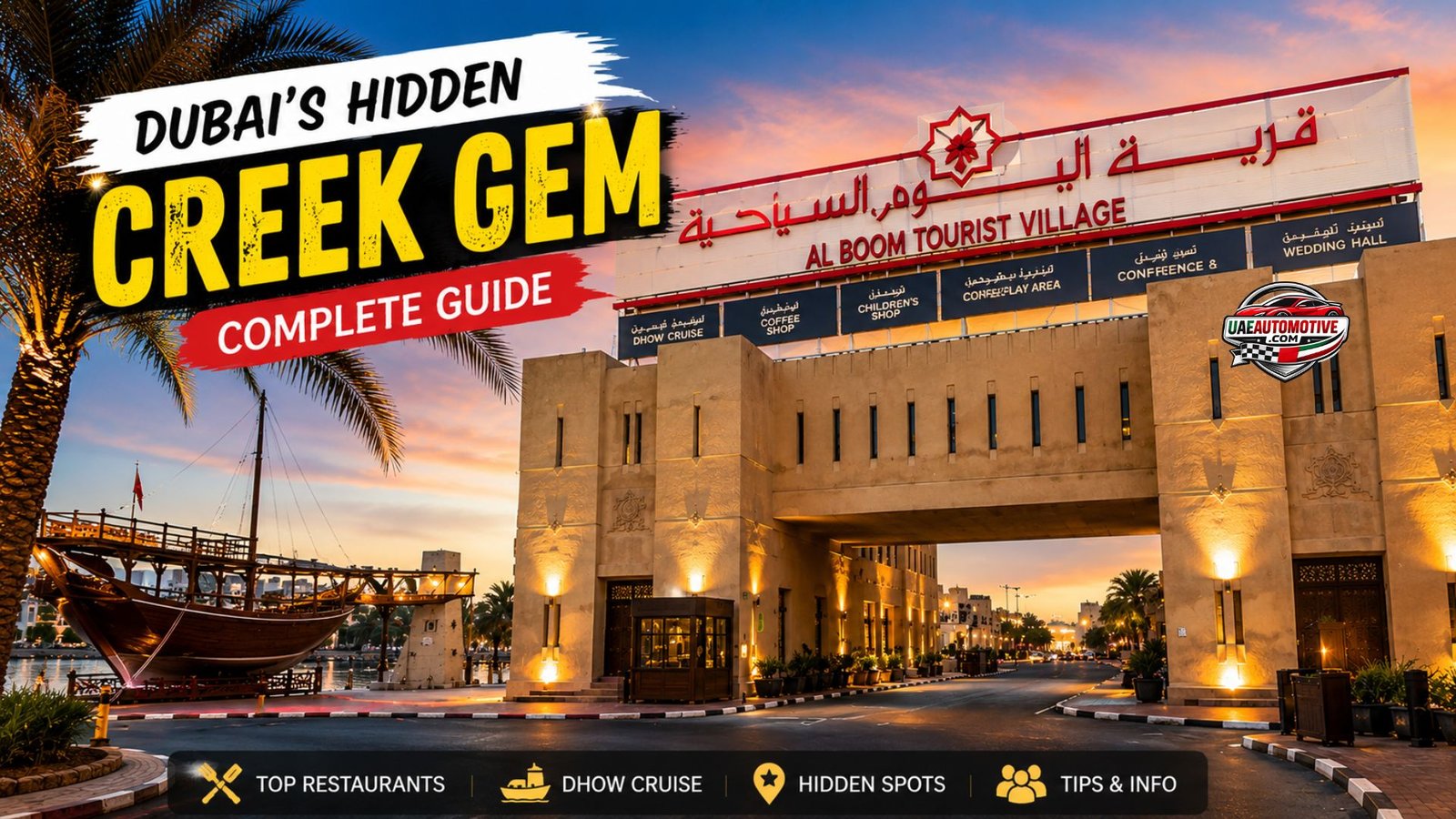
Walk along Dubai Creek near Garhoud Bridge on any quiet weekday evening and you’ll notice something unusual — a cluster of sandy walls, wooden wind towers, and the faint smell of old timber coming off the water. No LED screens. No queue barriers. No paid-entry arch with a gift shop behind it. Just a place quietly doing what it’s always done: holding onto the old Dubai while the city races forward everywhere else.
Al Boom Tourist Village opened in 1982. That’s before the Dubai Mall existed, before the Burj Khalifa was even a concept, back when the Creek still had actual working dhows and pearl divers were within living memory. The village was built on 15 acres of Creek-side land that had been in the Bin Harib family for decades — a family with deep maritime roots who chose to preserve that story rather than sell the land to developers. One of the family members, Hamama Bin Harib, later led a major renovation that transformed it from a tired heritage site into what it is today: a genuinely curated waterfront destination.
Most travel guides describe it as “a cultural village with dining and events.” That’s technically accurate and almost completely useless. What it actually is — and why it keeps drawing locals, expats, and repeat visitors — is something no amount of SEO copy gets at. This guide will.
Have A Look On It: Workers Village Mussafah
- Quick Facts Before You Go
- The Real Story Behind the Name
- Getting There Without Getting Lost
- What It Actually Is — and What It Isn't
- The Attractions: What's Actually Here
- The Dhow Cruise: What You Need to Know
- Dining: The Full Picture
- Event Venues: The Halls in Honest Detail
- Cultural Events and Festivals
- Things That Guiders Don't Tell You
- Nearby Attractions Worth Combining
- Is It Worth It? Honest Assessment
- Key Takeaways
- Frequently Asked Questions
Quick Facts Before You Go
| Address | Sheikh Rashid Road, near Al Garhoud Bridge, Umm Hurair 2, Dubai |
| Opening Hours | Daily 9:00 AM – 11:30 PM |
| Entry | Free (dining, cruises, and activities have separate charges) |
| Nearest Metro | Dubai Healthcare City Station → 10-min taxi (AED 15–20) |
| By Car | Behind Grand Hyatt Dubai, near Wafi Mall. Free on-site parking |
| From Downtown Dubai | ~10–15 min drive |
| From Dubai Airport | ~10 min by taxi |
| Best Time to Visit | October to April, evenings |
| Cruise Price | AED 49–55 per adult / AED 25–45 per child (2 hours, buffet included) |
| Themar Al Bahar Buffet | AED 160 per person (inclusive of VAT) |
| Zaman Awal | AED 70–120 per person |
| Camel Rides | AED 20 per ride |
The Real Story Behind the Name
The word boom (sometimes spelled bum) refers to a specific type of large wooden dhow — a sailing vessel that dominated the Arabian Gulf trade routes for centuries. These weren’t decorative boats. They were working ships, some stretching over 100 feet long, carrying dates, spices, cloth, and pearls between the Gulf, India, the East African coast, and beyond.
Before oil, this was how Dubai ate. Men went pearl diving in the summer heat. Traders navigated to Muscat, Mumbai, and Zanzibar. Life on the Creek was an economy, a culture, and an identity.
By the early 1980s, oil money was reshaping everything. Towers were going up fast. The old dhow yards were being absorbed by infrastructure projects. The generation that had actually lived the maritime life was aging, and the younger generation was growing up in an entirely different Dubai.
The Bin Harib family, whose ancestors had run maritime operations from this very stretch of Creek, could have sold the 15 acres and walked away wealthy. Instead, they built Al Boom Tourist Village as a deliberate act of cultural preservation — not a museum, not a theme park, but a living place where the heritage stayed active rather than archived.
That origin still shapes what the place feels like today, if you know to look for it.
Getting There Without Getting Lost
One thing that trips up first-timers: Al Boom Tourist Village is easier to reach than it looks on a map, but the entrance isn’t obvious if you’re approaching from the wrong direction.
The clearest landmark instruction: tell any driver “Al Boom Tourist Village, near Garhoud Bridge, behind Grand Hyatt.” That combination almost always works. Just saying “tourist village” to a GPS or driver can cause confusion — there are similarly named spots across Dubai.
Transport Options
- Taxi / Rideshare — AED 25–35 from Downtown; AED 15–20 from Dubai Healthcare City Metro. Easiest option for first-timers.
- By Metro — Get off at Dubai Healthcare City Station. From there, a 5–10 minute taxi. Al Jadaf Station is another nearby option.
- By Bus — Routes 32C, 44, and C7 all stop within walking distance, though this works better if you know Dubai’s bus network.
- By Car — Exit Sheikh Zayed Road at Oud Metha. Free parking on-site, which is more valuable than it sounds in Dubai.
Google Map View
What It Actually Is — and What It Isn’t
This is the section most guides skip, and it’s the reason some visitors leave disappointed while others are completely won over.
Al Boom Tourist Village is not a theme park. There are no rides, no ticketed zones, no wristbands, no day-pass, no staged performances on a strict schedule. You won’t “run out of things to do” in the conventional theme-park sense because the rhythm of the place is entirely different.
Think of it more like a heritage waterfront quarter — somewhere between a cultural park and a dining district — where you arrive with a purpose (dinner, a cruise, a wedding event, a cultural wander) and the place rewards that intention. Visitors who come expecting Dubai Mall energy leave confused. Visitors who come wanting something calmer, more honest, and more atmospheric leave wondering why more people don’t know about it.
The Attractions: What’s Actually Here
The Al Aref Dhow — Not a Replica
Most visitors walk straight past this without realizing what they’re looking at.
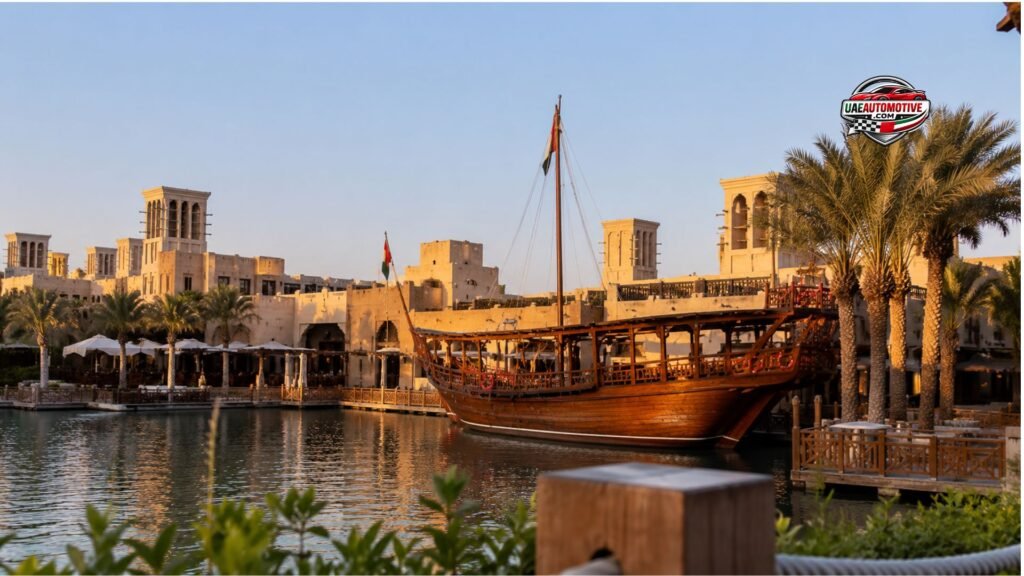
The Al Aref is a real, restored trading dhow that once worked the Gulf routes — not a constructed prop. It’s huge and sits at the heart of the venue as if it just returned from a long voyage. The lower deck has been converted into a maritime history exhibit. The upper deck houses Sketch Café, a low-key art café designed by an artist from the Bin Harib family, where a rotating cast of local creatives comes to draw, write, and drink coffee in one of the most atmospheric spots in Dubai that almost nobody talks about.
Walk through the hold of this boat and you smell old wood and the years in it. It’s less of a museum piece and more of a reminder that Dubai’s story started on the water.
The Art Gallery Nobody Mentions
Inside Zaman Awal, there’s a private gallery showcasing works from Emirati artists — names like Fatmah Lotah, Farid Al Rais, and Moza Al Falasi. The gallery was a deliberate choice by the younger Bin Harib family members who took over the renovation, part of their effort to connect heritage to living culture rather than just frozen artifacts.
Outside the gallery sits a model of the MV Dara — a commercial ship that sank near Umm Al Quwain in 1961, killing 238 passengers and crew. The Bin Harib family installed it specifically because they felt this maritime tragedy, locally known as “the Titanic of the Gulf,” had been forgotten. Small installations like this are why Al Boom has a depth that glossy tourism brochures never capture.
The Gargoor Seating Pods
Along the water’s edge, the family installed open seating areas modelled on Al Gargoor — the traditional dome-shaped fishing cages used across the Gulf. Guests sit on cushions in the majlis style, listening to the Creek and watching the water. It’s simple, thoughtful, and completely original. Nothing in Dubai looks quite like it.
Freej Village
Freej Village was added during the renovation and takes its design from Freej, the UAE’s celebrated 3D animated cartoon series created by Mohammed Saeed Harib — a man who has been called the Matt Groening of the Middle East. The show is deeply embedded in Emirati pop culture, with themes built around the comic tension of old Dubai traditions meeting modern city life.
The village section replicates character homes and neighbourhood design from the cartoon, with a playfulness that children respond to immediately. It hosts seasonal events, small shows, and family-friendly activities. It’s genuinely clever — not a childish add-on, but a cultural reference that Emirati families find meaningful and that visitors find charming once they understand the context.
The Dhow Cruise: What You Need to Know
This is the headline experience, and it earns that status.
What the Cruise Covers
A standard 2-hour cruise from Al Boom Tourist Village passes through genuinely interesting water. The route runs along the Dubai Water Canal and takes in:
- Burj Khalifa views from the water
- Dubai Creek Tower and surrounding development
- Business Bay skyline at night
- Jadaf Dhow Building Yard — one of the last active traditional boat-building sites in the Gulf
- Ras Al Khor Bird Sanctuary (flamingos are visible during low tide)
- Dubai Festival City and its fountain show
- Fire and water shows along the route
What’s Included
Every cruise package includes an Arabic cuisine buffet, Tanoura dance performance, horse show, light show, and air-conditioned cabin. The boat operates multiple timings daily:
| Slot | Boarding | Cruise |
| Sunset | 4:30 PM | 5:00 PM |
| Evening | 6:30 PM | 7:00 PM |
| Night | 8:30 PM | 9:00 PM |
(Sunset cruises typically run weekends only — confirm availability before booking)
Pricing
- Adults: AED 49–55 per person
- Children (3–9 years): AED 25–45
- Children under 3: Free
- Private charters: AED 1,000–2,000 (ideal for birthdays, anniversaries, small group celebrations)
Book at least 24 hours in advance. Weekend slots — especially the sunset cruise — fill up quickly.
Dining: The Full Picture
Zaman Awal — Emirati Soul Food by the Creek
This is the restaurant that the renovation was named after, and the one that locals actually recommend rather than just tolerating.
The interior is built around wooden beams, hanging lanterns, Arabic calligraphy, and tables that extend toward the Creek edge. It doesn’t try to be modern. It leans completely into old Emirati warmth. Meals here stretch long. Conversations happen. The food is the kind that sticks — lamb machboos, Gulf seafood grills, traditional desserts like assida and foga. Mains from around AED 60, full meal typically AED 70–120 per person.
What’s worth knowing: Zaman Awal serves some of the most authentic Emirati cooking available in Dubai at this price range. Al Fanar is the other well-known name in this category, but regulars often prefer Zaman Awal for having more character and less tourist-polish.
Themar Al Bahar — Seafood Over the Water
Themar Al Bahar is the volume crowd-pleaser, and for good reason.
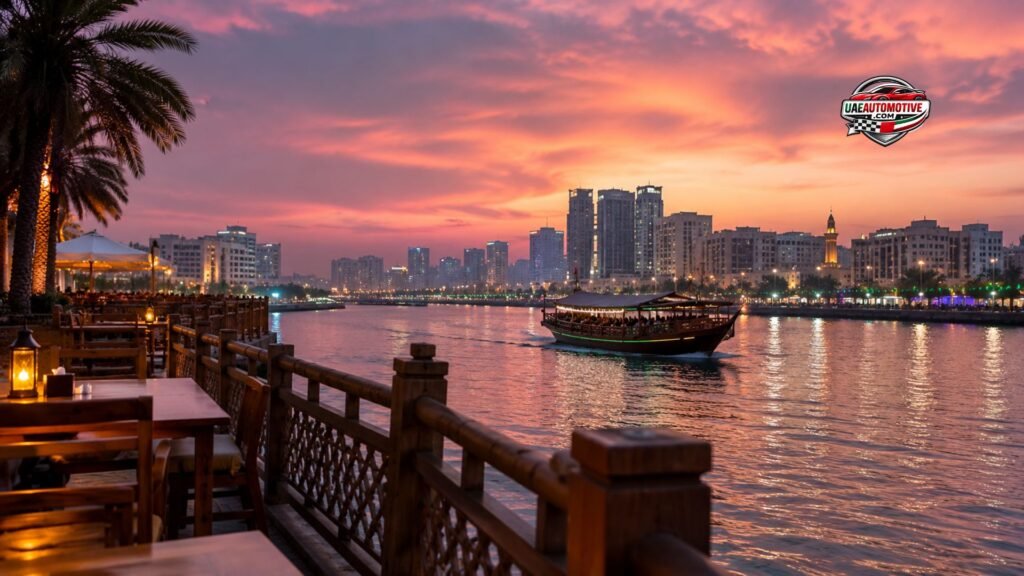
Tables sit literally over the water, with Creek views that make an evening dinner feel like a different city. The buffet — AED 160 inclusive of VAT with free parking — is genuinely substantial: fresh seafood, Levantine mezze, grilled fish, Arabic sweets, and international options. Portions are generous, almost unusually so. The management runs a tight service operation. The staff wear sailor-crew uniforms, which sounds gimmicky but actually adds to the atmosphere rather than undercutting it.
Best dishes according to regular visitors: seafood platter, mixed grill, and the Arabic sweet spread.
A practical note: the restaurant has children’s entertainment during meal times — a thoughtful operational detail that makes family dinners here dramatically easier than most places.
Sketch Café (on the Al Aref Boat)
Quiet, creative, affordable. Flatbreads, mocktails, good coffee. The upper deck of a real Gulf trading vessel. Artworks on the walls. Local artists come here to sketch and write in what is genuinely one of the more unusual café settings in Dubai. Good for: a late afternoon solo visit, a quiet coffee before a cruise, or anyone who appreciates atmosphere over spectacle.
Street-Level Stalls
Shawarma, cold juice, and small Arabic bites are available from vendors around the grounds for AED 15–25. These aren’t afterthoughts — the food quality is good and they serve the practical function of keeping energy up if you’re spending several hours here.
Event Venues: The Halls in Honest Detail
Al Boom Tourist Village has been hosting weddings for over three decades. Not as a secondary function — this is a core part of what the place is and how it sustains itself. The halls are genuinely grand.
The Four Main Halls
| Hall | Capacity | Character |
| Rashid Hall | 600–1,000 guests | One of the oldest and largest banquet halls in the Middle East. Grand, formal, built for major receptions |
| Latifa Hall | 300–800 guests | Elegant, modern-equipped, customizable. Best for weddings and corporate dinners requiring flexibility |
| Adhary Hall | 100–400 guests | Fully air-conditioned Bedouin tent style with round-table seating. Ideal for Arabic-style celebrations |
| Al Khor Hall | Up to 300 guests | Smaller and more intimate. Good for private dinners or smaller family events |
| Outdoor Areas | Up to 2,000 guests | Open courtyard and Creek-facing spaces, best used in cooler months or combined with hall events |
Catering is managed in-house and pricing is negotiated directly based on guest count, hall selection, and catering requirements. There’s no published rate card — contact the venue directly for a quote.
Cultural Events and Festivals
Ramadan
This is the most important time to visit if you can. The village transforms with traditional Ramadan tents, suhoor spreads (served in the pre-dawn hours), and a social atmosphere that runs well into the early morning. Entire families come for suhoor — harees porridge, dates, Arabic coffee, shared plates. It’s completely different from the commercial Ramadan tent experiences at hotels, which feel packaged. Here it feels inherited.
Book any Ramadan visit in advance. Tables fill up quickly and the experience is popular with locals.
UAE National Day (December 2nd)
Themed decorations, cultural performances, and special menus. The Creek backdrop makes this one of the more photogenic times to visit.
Cultural Workshops
Throughout the year — more frequently during public holidays — the venue runs workshops in calligraphy, traditional weaving, henna, and falconry. These aren’t staged tourist experiences; they’re run by people who actually practice these crafts. The difference shows.
Things That Guiders Don’t Tell You
A few things that genuinely affect your visit:
The GPS problem is real. Multiple visitor reviews note that apps sometimes drop the pin in the wrong location or direct to the wrong entrance. The clearest instruction is: Grand Hyatt Dubai, then follow signs for Al Boom once you’re in the neighbourhood.
Avoid Friday/Saturday evenings if you want space. Friday and Saturday evenings are noticeably busier — Themar Al Bahar can fill up completely. Tuesday through Thursday gives you the same experience with room to breathe.
The seaplanes are actually part of the atmosphere. From the Time Out Dubai report: the only occasional disturbance at Zaman Awal comes from seaplanes taking off and landing on the Creek nearby. It’s surprisingly evocative rather than disruptive — another detail you can’t get from a restaurant in a mall.
Children under 3 cruise for free. Not prominently advertised, but confirmed in cruise booking policies. Worth knowing for families with young children.
Summer visits are possible, just adjust your timing. May through September heat makes outdoor areas difficult before 7 PM. Arrive after sunset and the experience is completely different — the Creek at night is cool, the restaurants are lit up, and the heat becomes irrelevant.
The private charter option is underused. AED 1,000–2,000 for a private boat on the Creek for birthdays, proposals, or small anniversary dinners is genuinely good value by Dubai standards. Most people don’t know it’s available.
Nearby Attractions Worth Combining
| Attraction | Distance | Ideal For |
| Creek Park | Walking distance | Relaxed green space, cable car, picnics |
| Dubai Dolphinarium | 5 min | Kids’ shows (dolphin and seal performances) |
| Wafi Mall | 5 min | Egyptian-themed shopping, upscale dining |
| Al Seef | 15 min drive | Heritage waterfront with cafes and souks |
| Al Fahidi Historic District | 15 min drive | Wind-tower architecture, Dubai Museum |
| Gold & Spice Souks | 20 min drive | Classic Old Dubai market experience |
A well-structured half-day: arrive at Al Boom around 4:30 PM, walk the grounds and Sketch Café, board the sunset cruise at 5:00 PM, eat at Themar Al Bahar or Zaman Awal afterward. Six hours, one location, and you’ll leave having seen a side of Dubai that most tourists completely bypass.
Is It Worth It? Honest Assessment
Al Boom Tourist Village is one of those places that works entirely on the right expectations.
It’s an excellent choice if you:
- Want authentic Emirati dining with creek views rather than another hotel restaurant
- Are planning a wedding, corporate event, or family celebration with real atmosphere
- Have guests visiting Dubai who need to see something beyond the shiny modern version
- Want the dhow cruise experience without a commercialised tourist-operator setup
- Are visiting during Ramadan and want something that feels genuinely local
It may underwhelm if you:
- Come expecting a theme park or activity-heavy day out
- Arrive at midday in summer without a reservation anywhere
- Want cutting-edge modern cuisine and contemporary restaurant design
The negative reviews online almost all share the same profile: wrong expectations, or a visit without any planned activity. Set the intention before you arrive and it rarely disappoints.
Don’t Forget To Read It: Muhaisnah 2
Key Takeaways
- Entry is free; dining, cruises, and activities are paid separately
- Cruise: 2 hours, AED 49–55 for adults, buffet and shows included — book 24 hours ahead
- Themar Al Bahar buffet at AED 160 is considered excellent value; great for groups and families
- Zaman Awal is the place for authentic Emirati food in a heritage setting — not a tourist facsimile
- The Al Aref dhow is a real historic vessel, not a replica — walk through it
- Freej Village makes much more sense when you know it’s based on a beloved Emirati cartoon
- The Ramadan experience here is among the most authentic in Dubai
- Best months: November to March; best time of day: evening
Frequently Asked Questions
Is it possible to just walk around without spending money?
Yes, completely. Entry is free and nobody pressures you. Many locals come specifically to walk the Creek path, sit by the water, and enjoy the atmosphere without spending a dirham. It’s a genuinely free public space with optional paid experiences inside.
How is Al Boom’s dhow cruise different from the standard Dubai Creek dhow cruises?
The route is longer and more varied — it covers the Dubai Water Canal, offers Burj Khalifa and Business Bay views, passes the Jadaf Dhow Building Yard, and includes Ras Al Khor bird sanctuary sightings. Standard Creek cruises stay within the old Creek waterway. The Al Boom cruise is two hours with a buffet, live entertainment, and sightseeing. It’s one of the more comprehensive options at this price point.
Is Zaman Awal better than Al Fanar for Emirati food?
Both are legitimate options for traditional Emirati cuisine, but regulars tend to prefer Zaman Awal for atmosphere. Al Fanar has a more polished, tourist-ready presentation. Zaman Awal has more character — the Creek setting, the heritage building, the family connection to the land — and the food carries that rustic, home-cooked quality that’s harder to manufacture.
Can I visit without a car?
Yes. Dubai Healthcare City metro station is the easiest jump-off point, with a short taxi from there. The venue has no issues being reached by public transport — it just requires one taxi leg from the metro.
What should I eat if I visit Themar Al Bahar?
The seafood platter is the most-recommended dish by regular visitors. The mixed grill is the safe call if someone in your group isn’t a seafood fan. Save room for the Arabic sweet section of the buffet — it’s genuinely good. The buffet at AED 160 per person includes everything.
Is the village suitable for non-Muslim visitors during Ramadan?
Yes, and it’s actually one of the best times to visit. Daytime food options are limited, but evening and night-time experiences expand significantly. The suhoor tents are open to everyone. Modest dress is appreciated during Ramadan, as it is at any traditional venue in Dubai.
How far in advance should I book for a wedding at Rashid Hall?
For peak months (October through March), ideally 6–12 months ahead. Rashid Hall in particular books up with Arabic wedding receptions well in advance of the season. For corporate events and smaller halls, 2–3 months is usually workable. Contact the venue’s events team directly for current availability.
